EN
EN
Why Solar Film Is a High-Growth Priority for Auto Parts Distributors
Defining solar film vs. conventional tinting: UV rejection, heat reduction, and regulatory advantages
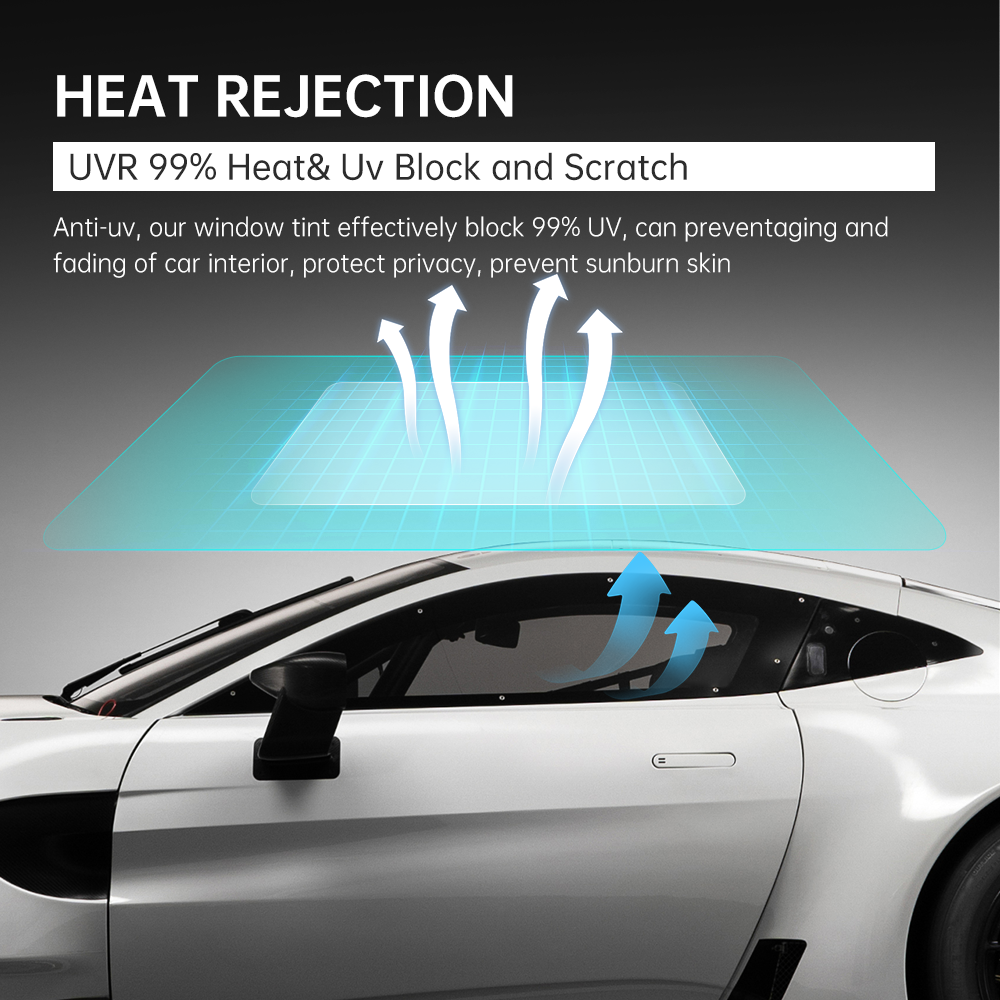
Solar film is an engineered laminate combining multiple layers of polyester and metalized or ceramic coatings to reject up to 99% of harmful UV radiation and reduce solar heat gain by as much as 78%. Unlike conventional dyed window tint—which serves mainly aesthetic purposes and degrades over time—solar film delivers measurable, lasting performance. Premium ceramic variants block up to 85% of infrared radiation without disrupting GPS, cellular, or keyless entry signals. Crucially, solar film is designed to meet stringent regulatory benchmarks, including SAE J357 and jurisdiction-specific visible light transmittance (VLT) requirements. Many dark aesthetic tints fail these standards outright, exposing installers and distributors to liability. For auto parts distributors, this distinction translates directly into higher per-unit margins, lower compliance risk, and recurring demand from certified professionals seeking performance-grade, regulation-ready products.
Market validation: 6.8% CAGR (2024–2030) fueled by fuel-efficiency mandates and rising consumer demand for cabin comfort
The global automotive film market is projected to grow at a compound annual growth rate of 6.8% from 2024 to 2030. This expansion is driven by two converging forces: tightening fuel-efficiency regulations and intensifying consumer expectations for cabin comfort. Reducing solar heat load lowers air-conditioning demand—improving fuel economy by up to 5% in hot climates—and aligns with OEM sustainability goals. Notably, 69% of total tinting demand originates from the aftermarket, where both individual buyers and fleet operators prioritize functional performance over appearance. A 24% surge in high-performance film demand between 2023 and 2025 further underscores this shift. By stocking solar film, distributors position themselves at the intersection of regulatory compliance, energy efficiency, and evolving consumer behavior—securing early advantage in a rapidly maturing segment.
Navigating Regional Distribution Realities for Solar Film
North America: Aftermarket-driven margins, digital cutting adoption, and DOT-compliant certification expectations
In North America, the aftermarket dominates solar film distribution—delivering profit margins 25–40% higher than OEM channels, per a 2024 industry report. Distributors adopting automated digital cutting systems realize 30% faster installation times and significantly less material waste—key advantages as consumers increasingly expect precision and speed. Regulatory compliance is non-negotiable: films must meet Department of Transportation (DOT) requirements for UV protection and labeling, with penalties exceeding $15,000 per violation for non-certified products. Tier 1 distributors now require SAE J3158-compliant technical documentation on all shipments—a gatekeeping measure that elevates quality standards and raises barriers to entry for uncertified suppliers.
Asia-Pacific: OEM integration pathways, tier-2 supplier collaboration models, and rapid growth in EV-compatible solar film demand
Across the Asia-Pacific region, OEM partnerships drive 55% of solar film volume, with manufacturers embedding heat-rejecting layers directly into EV window glass during production. Collaborative tier-2 supplier networks—such as those linking Vietnam and Thailand—enable just-in-time delivery at 20% lower logistics costs compared to traditional import models. Demand for EV-compatible solar film surged 180% year-over-year in 2024, led by innovations featuring ceramic nanoparticle layers that cut cabin cooling energy use by 34% while preserving full signal transparency for 5G telematics and vehicle-to-everything (V2X) systems.

Illustrative regional distribution pathways shown above: North America (left) emphasizes aftermarket channels vs. Asia-Pacific (right) focused on integrated manufacturing workflows.
Building Distributor Advantage Through Solar Film Value Stacking
Certification readiness (ISO 9001, SAE J357), technical training programs, and logistics scalability for multi-market rollout
To capture global opportunity, distributors must embed certification readiness into their operations. ISO 9001 certification ensures batch-to-batch consistency in optical clarity, adhesion, and durability—critical for OEM qualification and regulatory markets like the European Union and California. SAE J357 compliance validates real-world performance under standardized test conditions, reinforcing product credibility with installers and end users. Equally vital are technical training programs that equip installers with hands-on expertise in digital cutting, surface preparation, bubble-free application, and post-install defect assessment—reducing returns and strengthening brand trust. Logistics scalability—including strategically located multi-warehouse buffers and regional drop-ship capabilities—enables responsive service across diverse channels: from high-volume aftermarket retailers to boutique EV specialty shops—without overstocking or stockouts.
Bundling solar film with complementary auto parts (e.g., window regulators, climate control sensors) to increase basket size
Bundling solar film with functionally related components is a proven value-stacking strategy. When a customer orders a window regulator replacement, offering a pre-cut solar film kit transforms a $40 part into a $200 heat-management solution. Similarly, pairing film with cabin temperature sensors or UV-resistant door seals resonates strongly with fleets and EV owners pursuing holistic thermal control. These bundles raise average order value by 30–50%, simplify procurement for repair shops, and improve inventory turnover. Critically, they also reduce per-unit shipping costs and create recurring revenue—turning one-time part sales into system-level solutions that reinforce distributor relevance in an increasingly competitive landscape.
FAQ
What is the difference between solar film and conventional window tint?
Solar film is a high-performance laminate designed to reject UV rays and reduce heat, while conventional tints mainly serve aesthetic purposes and degrade over time.
Why is solar film a priority for auto parts distributors?
Solar film offers higher per-unit margins, lower compliance risks, and provides recurring demand from professionals seeking regulation-ready products.
What regions show the most demand for solar film?
Both North America, focusing on aftermarket channels, and Asia-Pacific, with a focus on OEM integration, show significant demand for solar film.
How do distributors gain advantage with solar film?
Distributors gain advantage through certification readiness, technical training programs, logistics scalability, and by bundling solar film with complementary parts.