EN
EN

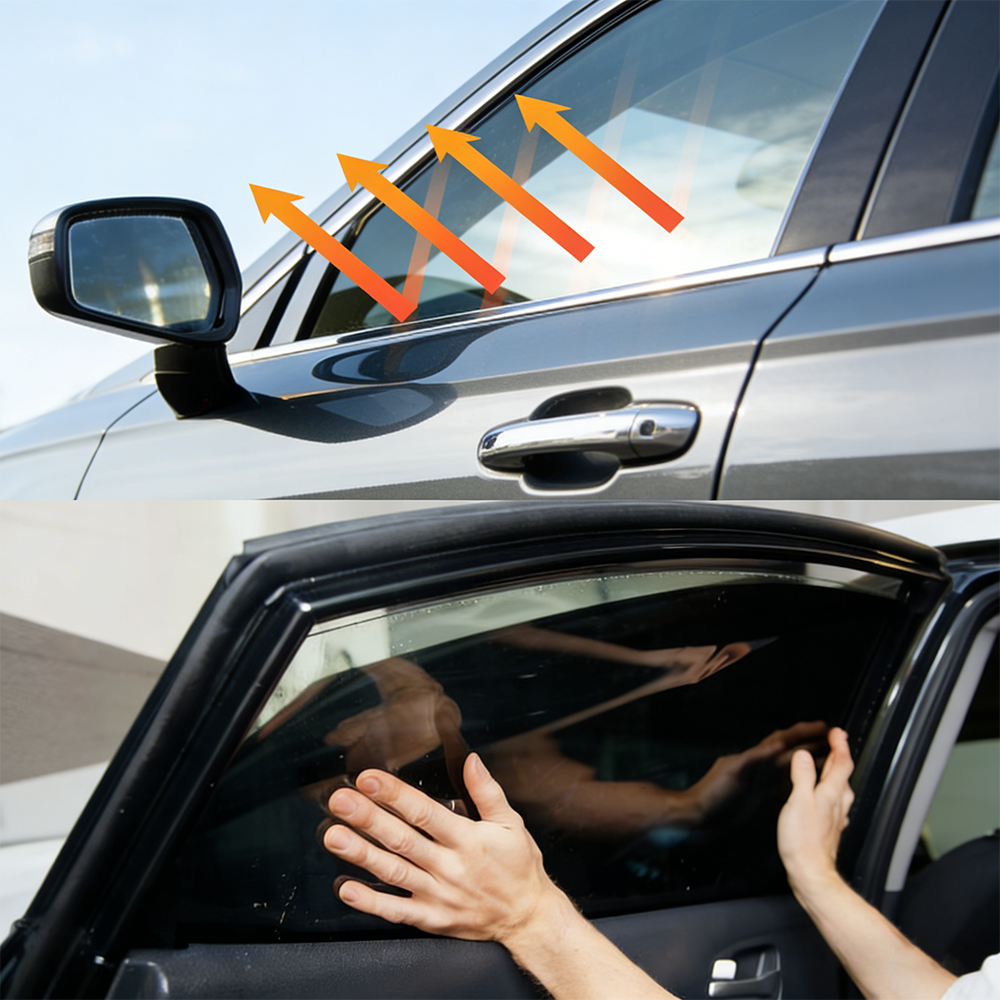
How High Permeability Window Tint Balances Privacy and Natural Light
The Science of Visible Light Transmission (VLT) and Visual Privacy Thresholds
Visible Light Transmission (VLT) measures the percentage of visible light that passes through window tint. High-permeability window tint typically offers a VLT of 50–70%, allowing ample daylight while maintaining daytime visual privacy. This balance is achieved through spectral selectivity—advanced materials that admit visible light but block infrared heat and reduce exterior visibility. Research shows occupants achieve functional visual privacy at VLT ≥40% during daylight hours, as external observers perceive interiors as indistinct shapes rather than identifiable details. Glare is simultaneously reduced by 40–60%, supporting comfortable indoor conditions without resorting to full blackout solutions. Lower VLT tints (20–35%) enhance nighttime privacy but significantly compromise natural light—making zoned selection essential for spaces like ground-floor offices or street-facing rooms.
Daylight Harvesting Benefits: Real-World Gains in Occupant Comfort and Lighting Energy Reduction
High VLT window tint serves as a cornerstone for daylight harvesting strategies—systems designed to maximize natural illumination and offset electric lighting use. When integrated thoughtfully, these tints help buildings achieve 10–25% reductions in lighting energy while maintaining recommended illumination levels. Daylight penetration also supports circadian health and reduces eye strain from monitor use by up to 58%. Pilot implementations at Denver’s Ridge View Elementary School demonstrated enhanced performance when high-VLT tint was paired with automated shade controls during peak sun hours. Occupant surveys further confirmed that shifting from reflective films to tinted glazing improved perceived spaciousness—a key alignment with biophilic design principles. Achieving this synergy requires matching VLT to solar orientation: west-facing glazing often performs best with ~50% VLT films, while north exposures can accommodate up to 70% VLT to leverage diffuse light. Facility managers report cooling load reductions of 12–16°F in structures where tint complements exterior shading.
- Occupant Health: 74% higher preference for tinted daylight environments versus artificial lighting
- Energy Metrics: Lighting energy reduction of 20–25% achieved in controlled daylight zones
- Heritable Design: Facilitates LEED BD+C daylight credit achievement via glare and luminance control
Material Advances Enabling Higher Permeability in Modern Window Tint
Nano-Ceramic and Multilayer Interference Coatings: Superior VLT/IR Rejection Ratios
Recent advances in nano-ceramic coatings enable significantly higher VLT while sustaining strong infrared (IR) rejection—without the darkening effect of traditional metal-based tints. These non-metallic particles block heat selectively, preserving clarity and color fidelity. Multilayer interference coatings enhance this precision by using microscopic film layers to target specific wavelengths. As a result, modern high-performance films now achieve VLT ratings above 70% alongside IR rejection exceeding 85%. Thermal performance testing confirms measurable HVAC load reductions in treated buildings. Spectral selectivity—defined as the ratio of IR rejection to visible light transmission—is now a central metric in materials engineering, enabling window tint to manage glare and solar gain without compromising views or architectural intent.
Strategic Integration of High Permeability Window Tint in High-Performance Buildings
Zoned Application: Matching VLT Levels to Orientation, Glazing Type, and Occupancy Patterns
Zone-based application maximizes both energy performance and occupant comfort. South-facing facades benefit from high VLT (≥50%) films that maintain daylight while rejecting substantial solar heat. East and west orientations require moderate VLT levels—typically 40–60%—to mitigate early-morning or late-afternoon glare without sacrificing views. North-facing glazing, receiving only diffuse light, performs best with higher VLT tints (often >70%), reducing reliance on artificial lighting. Glazing type matters too: triple-pane units with low-e coatings interact differently with tint than double-pane systems, so aligning VLT with existing U-value and SHGC ensures consistent thermal behavior. Finally, occupancy patterns guide selection—open-plan offices thrive with uniform daylight at VLT 40–60%, while private meeting rooms may use lower VLT to minimize contrast on projection screens. This tailored approach avoids the inefficiency of one-size-fits-all solutions and directly strengthens the building’s energy model.
Synergy with Biophilic Design and Net-Zero Goals: Case Evidence from LEED-NC v4.1 Projects
High-permeability window tint supports both biophilic design and net-zero energy targets by preserving unobstructed visual access to the outdoors—the “prospect” principle—while delivering glare control and UV protection. In LEED-NC v4.1 projects, such integration has contributed to achieving Daylight and Quality Views credits, with solar heat gain coefficients consistently below 0.3. One certified commercial retrofit paired a 70% VLT nano-ceramic tint with automated blinds on its south facade, cutting annual lighting energy by 18% while sustaining 90% occupant satisfaction with daylight quality. Another multi-tenant office used zoned high-permeability tints across all orientations and reduced HVAC energy by 12% compared to a base-code design—advancing its net-zero readiness. These cases confirm that high-permeability tint is not an afterthought but a foundational element of high-performance building design.
Selecting the Right High Permeability Window Tint for Your Project
Choosing the right high-permeability window tint requires balancing Visible Light Transmission (VLT), heat rejection, and long-term durability. Begin by clarifying your core objectives:
- Context-specific VLT: In high-visibility commercial settings—such as retail storefronts—select 70%–90% VLT to preserve outward sightlines while naturally softening interior brightness. Climate zone strongly influences optimal selection: desert regions prioritize solar heat rejection, even if it means accepting a modest VLT reduction.
- Spectral selectivity: Prioritize nano-ceramic or sputtered metallized films over dyed alternatives. These deliver superior separation between visible light transmission and infrared rejection—achieving over 60% IR blockage at 75% VLT. A higher spectral selectivity value indicates more efficient heat management per unit of admitted light.
- Material stability: Verify long-term performance metrics. Premium installations retain over 92% of their original solar protection efficacy after 10 years under accelerated weathering tests. Scratching, adhesive failure, and hazing are early indicators of substandard film chemistry.
- Legal compliance: Local codes vary widely—some restrict non-residential tint reflectivity to <15%, while others mandate minimum VLT thresholds for safety or egress. Always verify municipal requirements before specification. Professional installation remains critical; improper application leads to premature peeling, bubbling, or optical distortion.
Manufacturer specifications often obscure true lifecycle cost. Film longevity depends on chemical UV stability, warranty coverage, and resilience to thermal cycling. For complex or high-stakes projects, commission mock-up installations to validate that selected permeability aligns with energy modeling targets and occupant expectations.
FAQ
What is Visible Light Transmission (VLT)?
Visible Light Transmission (VLT) refers to the percentage of visible light that passes through a window tint. It plays a crucial role in determining the amount of natural light entering a space while balancing privacy.
How does high permeability window tint support energy savings?
High permeability window tint aids in daylight harvesting by optimizing natural illumination. This reduces the reliance on artificial lighting and ultimately contributes to energy savings by lowering lighting and cooling energy demands.
What are nano-ceramic coatings?
Nano-ceramic coatings are advancements in window tint technology that allow for high visible light transmission while effectively rejecting infrared heat. These coatings maintain clear visibility without the darkening effect of traditional tints.
How does window tinting align with biophilic design?
Window tinting aligns with biophilic design by maintaining visual access to the outdoors and controlling glare, creating an environment that supports natural comfort and connection to nature.
What considerations should I keep in mind when choosing window tint?
When selecting window tint, consider factors such as desired VLT levels, infrared rejection capabilities, material durability, and local legal requirements. Ensuring professional installation is also essential for long-term performance.
Table of Contents
-
How High Permeability Window Tint Balances Privacy and Natural Light
- The Science of Visible Light Transmission (VLT) and Visual Privacy Thresholds
- Daylight Harvesting Benefits: Real-World Gains in Occupant Comfort and Lighting Energy Reduction
- Material Advances Enabling Higher Permeability in Modern Window Tint
- Strategic Integration of High Permeability Window Tint in High-Performance Buildings
- Selecting the Right High Permeability Window Tint for Your Project
- FAQ