EN

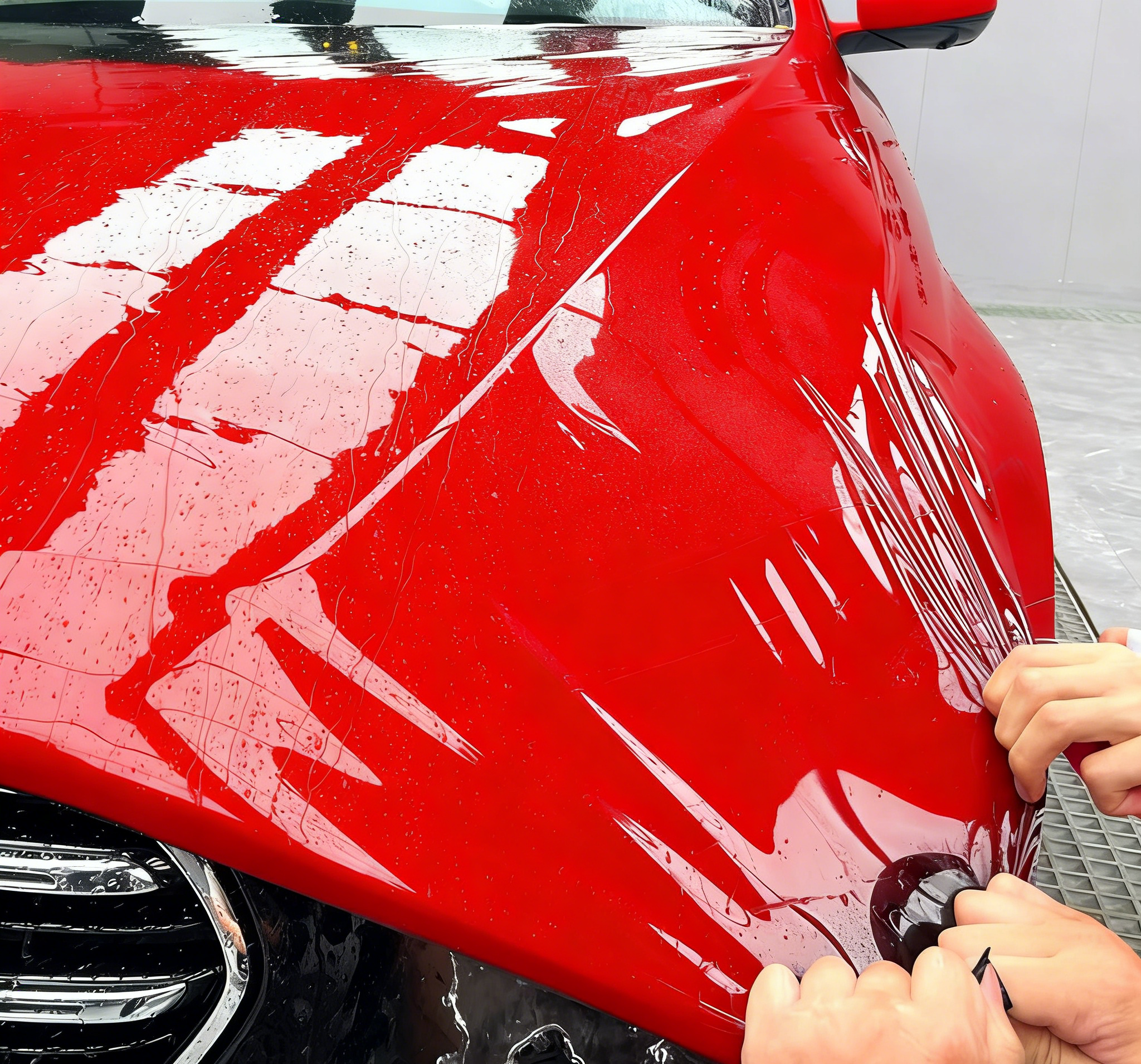
Exceptional Mechanical Durability for Demanding Applications
Abrasion and tear resistance: How TPU film outlasts PVC and PE in real-world stress tests
In demanding industrial and consumer applications, material failure from surface wear or tear propagation leads to costly replacements and downtime. TPU film consistently outperforms conventional films like PVC and PE in standardized abrasion and tear tests. Taber abrasion testing (ASTM D4060) shows that a 0.5 mm TPU film loses less than 20 mg of mass after 1,000 cycles—less than one-quarter the wear of comparable PVC, which may lose over 80 mg under identical conditions (materials lab study, 2023). This resilience stems from TPU’s segmented block copolymer structure, where hard domains reinforce the soft matrix and inhibit crack initiation. In tear propagation tests (ASTM D1938), TPU film delivers tear strengths above 100 N/mm—more than double the typical 40 N/mm for plasticized PVC. Real-world validation comes from mining operations, where TPU-laminated conveyor belt covers endured 12 months of continuous particulate impingement without perforation, while PVC counterparts required replacement after just 4 months. The combination of high intrinsic toughness and uniform stress distribution makes TPU the preferred choice for protective gear, inflatable structures, and flexible containment liners where puncture and scuffing are inevitable.
Balanced elasticity and surface hardness: Why high elongation doesn’t sacrifice scratch resistance
A common misconception is that highly elastic films are inherently soft and prone to scratching. TPU defies this trade-off by coupling elongation at break values of 400–600% with surface hardness in the Shore 85A–95A range. This balance is engineered through the ratio of hard to soft segments: hard domains act as physical crosslinks that resist deformation and surface shearing, while soft segments enable extensive chain mobility. In scratch testing per ISO 1518, TPU film withstands a stylus load of 5 N without visible marring—a performance on par with rigid thermoplastics—yet retains the ability to stretch six times its original length. This dual property proves critical in applications like automotive interior laminates, where the film must repeatedly flex during seat occupancy yet resist key scratches from daily use. Similarly, in wearable electronics and foldable device covers, TPU film maintains a damage-free surface after 100,000 dynamic bend cycles at a 1.5 mm radius while resisting fingernail scuffs (durability assessment report, 2024). Its hard-segment crystallinity also enables rapid recovery after indentation, so shallow surface marks disappear within minutes. As a result, designers no longer need to compromise elongation for scratch resistance—expanding functional and aesthetic possibilities across sectors.
Long-Term Environmental and Chemical Stability
Hydrolysis resistance and solvent compatibility—critical advantages for automotive and industrial TPU film use
TPU film’s long-term stability begins with its inherent resistance to moisture-induced degradation. Unlike PVC—which often embrittles after prolonged humidity exposure—ether-based TPU grades withstand over 1,200 hours at 85 °C and 85% relative humidity without significant loss of tensile strength. This hydrolysis resistance is vital in automotive under-hood applications, where condensation and coolant splashes are routine. Industrial environments further challenge films with oils, fuels, and aggressive cleaning solvents. Here, TPU demonstrates remarkable compatibility: it swells minimally when immersed in ASTM reference oils for 168 hours, retaining over 90% of original mechanical properties. This resilience arises from the polymer’s segmented architecture—hard segments provide chemical shielding, while soft segments preserve flexibility. Direct comparisons underscore the advantage: polyethylene sheets exposed to the same solvent blends can lose up to 40% tear strength, rendering them unsuitable for hydraulic hose covers or fuel-resistant liners. Consequently, manufacturers of automotive bellows, industrial curtains, and chemical storage liners consistently specify TPU film to avoid premature failure and costly replacements.
UV stability and color retention: TPU film vs. PVC/rubber after accelerated weathering
UV endurance separates TPU film from many conventional alternatives. Accelerated weathering tests (QUV-A 340 nm, 1,000 hours) reveal TPU film retains over 95% of original elongation at break and exhibits only a 1.5-unit shift in yellowing index. By contrast, PVC develops severe chalking and a brittle surface within the same interval, while rubber materials often show surface cracking and a 30% loss of tensile strength. The difference lies in TPU’s capacity to incorporate hindered-amine light stabilizers and UV absorbers directly into the polymer matrix—creating non-leaching, built-in protection. Outdoor signage, protective covers, and inflatable structures benefit significantly: a leading manufacturer reports that TPU-laminated fabric maintains vibrant color and flexibility for over five years in desert sunlight, outlasting comparable PVC-coated fabrics by a factor of two.
Superior Functional Performance in Specialized Applications
Controlled breathability (MVTR) in medical barriers and performance sportswear laminates
A defining advantage of TPU film is its ability to precisely manage moisture vapor transmission rate (MVTR). Unlike fully sealed barriers that trap heat and sweat, breathable TPU film functions as a selective membrane—permitting active transport of water vapor from high- to low-humidity environments while blocking liquid water, blood-borne pathogens, and bacteria. This makes it indispensable for advanced wound dressings and surgical drapes, where maintaining a sterile yet breathable interface supports healing and skin integrity. In performance sportswear, this controlled permeability translates to enhanced comfort during extreme activity: a specialized TPU laminate achieves an MVTR exceeding 2,500 g/m²/24h while maintaining a hydrostatic head above 10,000 mm—a rare combination of breathability and waterproofing. Crucially, MVTR can be tuned during manufacturing by adjusting the hard-to-soft segment ratio—enabling application-specific optimization, from high-transmission rates for lightweight running jackets to lower, more protective rates for chemical splash suits.
Optical clarity and thermal stability: Maintaining >92% transmittance under repeated thermal cycling
Beyond barrier and mechanical performance, TPU film delivers exceptional optical fidelity—critical for high-value surface protection and visual applications. High-quality aliphatic TPU film achieves initial light transmittance exceeding 92%, rivaling glass clarity while offering far greater impact resistance. Its true advantage lies in long-term optical stability: leading aliphatic grades retain high transmittance and resist yellowing after thousands of hours of UV exposure—a marked improvement over aromatic TPUs or conventional PVC films, which become hazy and brittle. This durability extends to thermal stress: in rigorous cycling from –40°C to 85°C, TPU’s elastic network accommodates expansion and contraction without delamination or micro-crazing—unlike other clear films that scatter light under similar conditions. As a result, protective films on automotive instrument clusters or flexible display laminates preserve underlying optical signal integrity and screen visual quality throughout the product’s full lifecycle.
FAQ Section
What is TPU film, and how does it differ from PVC and PE?
TPU (Thermoplastic Polyurethane) film is a versatile polymer with properties that outperform PVC (Polyvinyl Chloride) and PE (Polyethylene) in durability, elasticity, chemical stability, and optical clarity. TPU stands out due to its segmented block copolymer structure, providing superior abrasion resistance, tear strength, and environmental adaptability.
How well does TPU film withstand long-term environmental stresses?
TPU film demonstrates excellent resistance to hydrolysis, UV degradation, and chemical exposure, making it highly reliable for applications such as automotive parts, industrial curtains, outdoor signage, and protective covers.
Is TPU film suitable for applications requiring breathability?
Yes, TPU film can be precisely engineered for controlled breathability, allowing moisture vapor to pass while blocking liquids and pathogens. This feature makes it ideal for medical barriers, performance sportswear, and advanced wound dressings.
Does TPU film retain optical clarity over time?
High-quality aliphatic TPU films maintain over 92% light transmittance and resist yellowing, even after extended UV exposure and thermal cycling. This makes them perfect for automotive instrument clusters and flexible display laminates.
Can TPU film handle regular wear and tear without compromising its integrity?
Yes, TPU film couples high elongation with surface hardness, ensuring it can resist abrasions, scratches, and impacts, while maintaining flexibility under repeated use in demanding applications.
Table of Contents
- Exceptional Mechanical Durability for Demanding Applications
- Long-Term Environmental and Chemical Stability
- Superior Functional Performance in Specialized Applications
-
FAQ Section
- What is TPU film, and how does it differ from PVC and PE?
- How well does TPU film withstand long-term environmental stresses?
- Is TPU film suitable for applications requiring breathability?
- Does TPU film retain optical clarity over time?
- Can TPU film handle regular wear and tear without compromising its integrity?