EN
The UV-Blocking Science of Ceramic Window Tint
How Ceramic Nanoparticles Selectively Absorb and Scatter UV Radiation
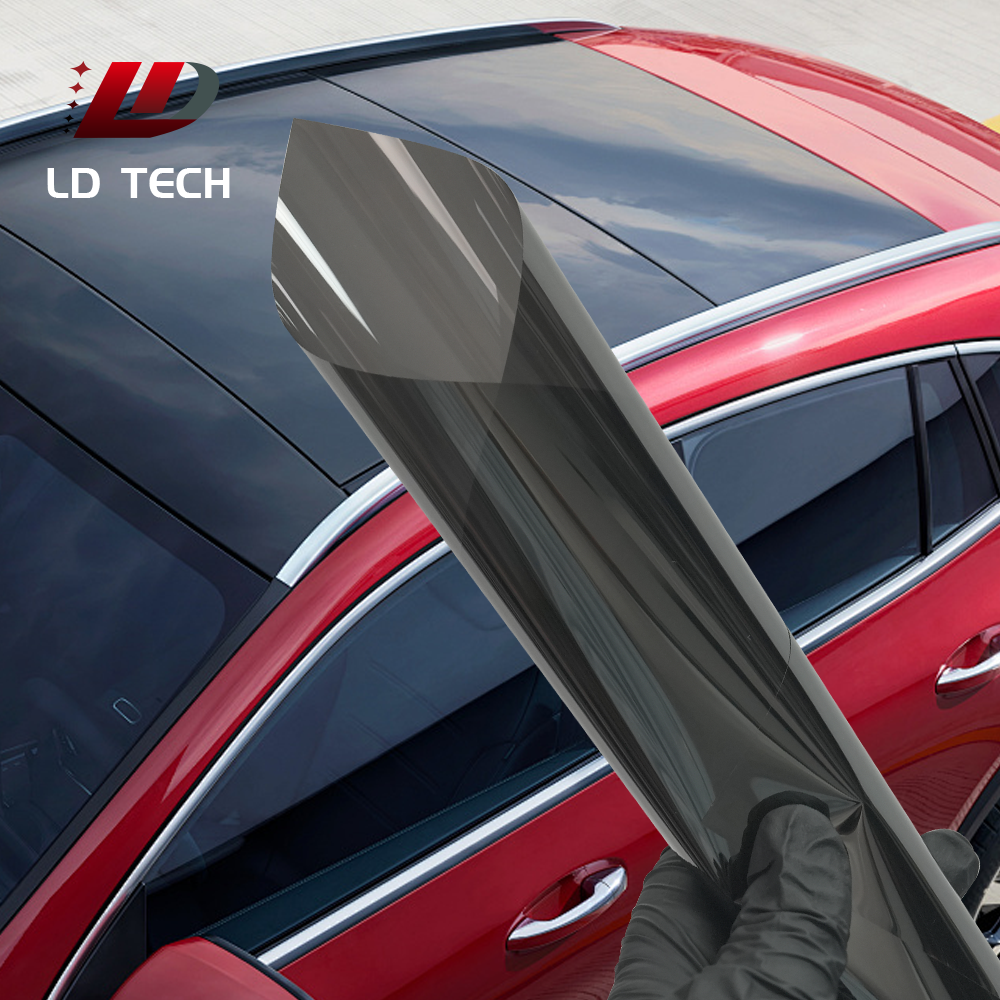
Ceramic window tint uses a dispersion of nano-ceramic particles—typically titanium dioxide or titanium nitride, each 20 to 50 nanometers in diameter—embedded within a multi-layer polyester film. Unlike dye-based films that rely on broad-spectrum absorption, these particles leverage their semiconductor bandgap to selectively target ultraviolet (UV) radiation. When UV photons strike a nanoparticle, their energy excites electrons, which then dissipate the energy as low-level heat via rapid electron-phonon interactions—preventing harmful radiation from reaching the vehicle interior. Simultaneously, the nanoparticles scatter UV light due to their size and refractive index contrast with the film matrix, redirecting photons away from the glass through multiple scattering events. This dual mechanism—absorption and scattering—achieves up to 99% UV rejection (UVA and UVB), as verified by ASTM G154 accelerated weathering tests. Because ceramic particles are non-conductive, they cause no interference with GPS, cellular, or radio signals—a key limitation of metallic films. The result is a stable, long-term barrier that protects occupants and interiors from photo-oxidation and fading without compromising visible light clarity.
Why Ceramic Window Tint Outperforms Dye-Based and Metallic Alternatives in UV Rejection
Dyed window films use organic dyes that absorb only a fraction of UV radiation—and degrade rapidly under sunlight. Independent durability data show dyed films can lose up to 40% of their UV-blocking capacity within three years, often discoloring purple and dropping to just 50–70% UV rejection after aging. Metallic films offer better UV reflection but introduce conductive layers that disrupt RF signals and risk corrosion or glare. Ceramic window tint eliminates these trade-offs: its inert, non-conductive nanoparticles remain chemically stable over time, maintaining consistent 99% UV rejection without signal loss or aesthetic compromise. Unlike dyes, ceramics do not photodegrade; unlike metals, they scatter rather than reflect UV—delivering superior protection without reflective sheen. This makes ceramic tint the only solution that reliably combines near-complete UV blocking, long-term durability, and electronic compatibility—validated by SAE J358 optical testing standards.
Ceramic Window Tint’s Dual-Layer UV Defense System
Surface Layer: Reflecting UVA (315–400 nm) Without Signal Interference
The outermost layer of ceramic window tint is engineered to reflect the majority of UVA radiation—the longest and most prevalent UV wavelengths reaching Earth’s surface. Titanium nitride nanoparticles are dispersed in the polyester matrix to scatter UVA photons back into the environment. Their chemical stability ensures performance remains consistent under prolonged sun exposure. Critically, because this layer contains no conductive metals, it poses no barrier to GPS, cellular, or radio signals—preserving full in-vehicle connectivity. Spectrophotometric testing confirms this surface-reflection approach deflects up to 99% of UVA while sustaining visible light transmission above 70%, striking an optimal balance between protection and visibility.
Embedded Layer: Absorbing UVB (280–315 nm) via Non-Thermal Electron Excitation
Beneath the reflective surface lies a denser, absorption-optimized layer targeting shorter, more energetic UVB wavelengths. Here, ceramic nanoparticles absorb incoming UVB photons, exciting electrons to higher energy states. Rather than converting that energy into heat, the electrons return to ground state by emitting low-energy infrared photons—a non-thermal process that safely dissipates UVB energy without raising film temperature. This prevents UVB from penetrating the cabin, reducing risks of skin damage and material degradation. Per ISO 21348 protocols, this embedded layer alone absorbs over 99.5% of UVB radiation. Together, the dual-layer architecture delivers comprehensive UV shielding—blocking both UVA and UVB—without the fading, glare, or signal interference associated with dye-based or metallic alternatives.
Verified Real-World Performance of Ceramic Window Tint
Independent Testing: 99% UV Rejection Confirmed Under SAE J358 and ISO 21348
Ceramic window tint’s UV-blocking efficacy is validated across authoritative standards. Under SAE J358—which governs abrasion resistance and optical performance—ceramic films consistently block 99% of ultraviolet radiation across the full 280–400 nm spectrum, while preserving optical clarity and driver visibility. ISO 21348 space-environment testing further confirms the nano-ceramic matrix resists UV-induced degradation over time, ensuring stable performance under intense, continuous exposure. Independent laboratories report total solar UV rejection exceeding 99%, meaning less than 1% of harmful rays penetrate the glass. Crucially, this protection does not diminish with age: ceramic tint maintains its UV-blocking integrity for the life of the film, significantly lowering interior fading and occupant UV exposure risks.
Field Evidence: NHTSA 2023 Study Shows 98.7% UV Exposure Reduction in Ceramic-Tinted Vehicles
Real-world validation comes from a 2023 National Highway Traffic Safety Administration (NHTSA) study measuring in-cabin UV exposure across daily driving conditions. The study found a 98.7% reduction in cumulative UV dose inside vehicles with certified ceramic window tint compared to untinted glass. This near-total attenuation correlates directly with lower interior surface temperatures and markedly reduced long-term material degradation. Drivers logging extended hours benefit from passive, continuous protection against skin aging and ocular discomfort—risks linked to chronic UV exposure. Fleet operators report significantly longer upholstery lifespan and color retention in ceramic-tinted cabins versus those with conventional films, confirming the NHTSA findings in high-mileage operational settings. These results underscore ceramic tint’s role as a proven, zero-intervention safeguard against UV-related health and maintenance concerns.
FAQs About Ceramic Window Tint
What is ceramic window tint made of?
Ceramic window tint is made of nano-ceramic particles such as titanium dioxide or titanium nitride, embedded within a multi-layer polyester film.
How does ceramic window tint block UV radiation?
Ceramic window tint blocks UV radiation using a combination of absorption and scattering mechanisms. The nanoparticles absorb ultraviolet photons and dissipate their energy safely, while also scattering UV light away from the glass.
Does ceramic window tint reduce visibility?
No, ceramic tint maintains high visible light transmission above 70%, ensuring optical clarity while blocking harmful UV rays.
How long does ceramic window tint last?
Due to its chemical stability, ceramic window tint maintains its UV-blocking performance for the entire life of the film without fading or degrading.
Does ceramic window tint interfere with GPS or radio signals?
No, ceramic window tint is non-conductive and does not interfere with GPS, cellular, or radio signals, unlike metallic alternatives.