EN
EN

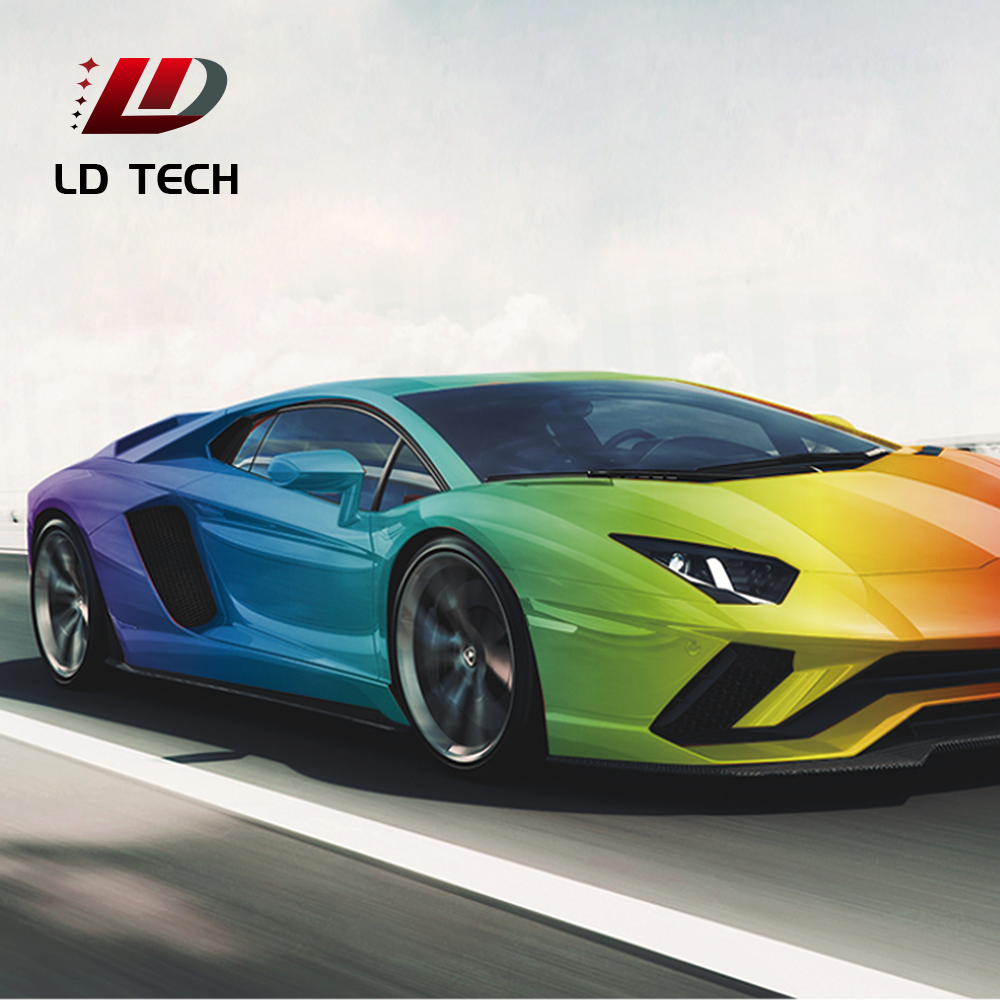
Why TPU Film Is the Industrial Standard for Automotive PPF
Thermoplastic polyurethane (TPU) has become the backbone of paint protection film (PPF) for car beauty and modification factories, owing to its unmatched combination of mechanical resilience and long-term optical clarity. Modern TPU films are engineered to withstand the rigors of daily driving—from stone impacts to environmental degradation—while maintaining factory-grade installation efficiency and aesthetic fidelity.
Superior Material Performance: Stone Chip Resistance, UV Stability, and Self-Healing Recovery
TPU paint protection films deliver exceptional stone chip resistance by absorbing and dispersing impact energy. Accelerated gravelometer testing (ASTM D3170) shows that aliphatic TPU retains over 95% of original paint integrity after 100 high-velocity impacts—a marked improvement over PVC alternatives, which often fall below 70%. Aliphatic TPU grades incorporate advanced UV stabilizers that block 99% of ultraviolet radiation, preventing photo-oxidation and preserving gloss even after years of direct sun exposure.
The most valued feature for high-volume factories is the self-healing topcoat. Minor scratches and swirl marks vanish when exposed to ambient heat or warm water, as hydrogen bonds within the polymer network dynamically reconfigure. This autonomous repair reduces manual polishing, lowers warranty claims, and extends service life—making TPU a cost-effective, performance-driven solution for professional car modification centers.
TPU vs. PVC & TPH: Technical Comparison for High-Volume Factory Applications
For car modification factories operating at scale, material choice directly impacts throughput and profit margins. Polyvinyl chloride (PVC) and thermoplastic polyolefin (TPH) films are lower-priced but exhibit critical shortcomings. PVC-based films haze and yellow rapidly under UV exposure, often requiring replacement within 12–18 months and generating customer complaints. TPH films lack the elasticity needed for complex vehicle contours, leading to installation failures and higher scrap rates.
TPU, by contrast, combines high elongation (>400%) with superior recovery—enabling installers to wrap intricate panels without tearing or lifting. Aliphatic TPU also maintains optical clarity far longer, preserving the vehicle’s original gloss. Internal warranty data from a leading manufacturer shows that switching from PVC to TPU reduces film-related claims by over 30% annually. This predictability allows factories to standardize workflows, minimize rework, and reduce material waste—directly strengthening the bottom line.
Key TPU Film Specifications Required by Car Modification Factories
Mechanical Benchmarks: Elongation (>400%), Tensile Strength (55–75 MPa), and Thermal Cycling Durability
Car modification factories rely on TPU film that delivers consistent mechanical performance under real-world stress. The material must exceed 400% elongation to stretch uniformly over complex body contours without tearing, while tensile strength in the 55–75 MPa range ensures resistance to stone chips and impacts—values confirmed in performance-grade TPU analyses. Equally critical is thermal cycling durability: the film must withstand repeated temperature extremes without losing adhesion or clarity. Industry requirements demand no cracking at –40°C and property retention above 85% after 500 hours at 100°C—confirming that high-quality TPU maintains self-healing and protective properties across seasons and rapid climate shifts.
Chemical & Operational Resilience: Gasoline, IPA, and High-Speed Wrapping Line Compatibility
A TPU film’s field performance depends on its chemical resistance and compatibility with high-throughput installation. The film must resist swelling, softening, or discoloration from common automotive chemicals like gasoline and isopropyl alcohol (IPA) to preserve the vehicle’s finish. In fast-paced modification centers, the film’s low initial tensile strength—typically 0.2–1.5 MPa at 5–10% elongation—enables swift, controlled stretching during wrapping, preventing over-thinning and edge lifting. This operational advantage, combined with proven chemical inertness, allows factories to maintain a high-speed, defect-free application process—reducing rework and supporting consistent output in bulk production environments.
Scalable Bulk Supply Models for B2B TPU Film Procurement
OEM/ODM and Private-Label Options with Custom Thickness, Adhesive, and Roll Configuration
When sourcing TPU film for car beauty and modification factories, the ability to tailor specifications directly impacts production efficiency and brand differentiation. A 2023 procurement analysis indicated that over 60% of large-scale PPF applicators now prefer private-label TPU film to build customer loyalty. OEM and ODM partnerships allow precise customization of:
- Thickness: typically 0.1 mm to 0.3 mm, balancing conformability and impact resistance.
- Adhesive type: Acrylic pressure-sensitive adhesive (PSA) with tunable initial tack and repositionability for high-speed wrapping lines.
- Roll configuration: Width options from 0.5 m to 2.0 m, and roll lengths up to 600 m, minimizing changeovers.
These options reduce material waste and ensure seamless integration with automated cutting systems. Factoring in custom adhesive development, lead times may extend by 2–4 weeks—but the resulting film often yields higher installation throughput and lower rejection rates. Bulk orders with clear specifications can secure volume discounts of up to 15% compared to standard stock rolls, as per a 2023 industry benchmark.
Cleanroom-Coated vs. Extruded TPU Film: Matching Production Method to Factory Throughput Needs
Factories must choose between two dominant TPU film manufacturing methods, each suited to different operational scales. Cleanroom coating applies a liquid TPU layer onto a release liner in a particle-controlled environment, ensuring uniform thickness and virtually no optical distortion. In contrast, extrusion melts TPU pellets and forms a film through a die, offering faster line speeds and lower cost—but slightly higher haze. The following table summarizes key distinctions based on a 2023 manufacturing efficiency study.
| Production Method | Cleanroom-Coated TPU Film | Extruded TPU Film |
|---|---|---|
| Optical Clarity | ≥ 95% light transmission, minimal gel particles | Slightly lower clarity, may require post-treatment |
| Production Speed | ≈ 20 m/min, limited by coating line | ≥ 50 m/min, high-volume continuous process |
| Yield & Defect Rate | < 0.5% defects per roll | < 2% defects, dependent on melt filtration |
| Cost per m² | Higher due to cleanroom overhead | 20–30% lower material cost |
| Typical Application | Premium PPF for luxury vehicles | Economy PPF for high-volume installers |
For a factory processing 10,000 m² of TPU film per month, the extruded route can reduce material expenditure by approximately $25,000 annually, while cleanroom-coated film justifies its premium through superior brand positioning and fewer rework incidents. A 2023 analysis revealed that extruded TPU film achieves a 25% lower per-unit cost when annual throughput exceeds 50,000 m². High-mix, low-volume product lines often prefer cleanroom-coated film for its consistent quality, whereas high-volume, standardized PPF kits benefit from the cost efficiency of extruded film. The decision hinges on the balance between throughput and quality benchmarks.
Frequently Asked Questions
What makes TPU film superior to PVC and TPH for paint protection applications?
TPU film delivers superior elongation, optical clarity, UV stability, and self-healing properties. These qualities reduce customer complaints and factory rework, making it a preferred choice over PVC and TPH.
How does the self-healing property of TPU film work?
The polymer network within TPU films reconfigures dynamically when exposed to heat or warm water, allowing minor scratches to disappear without manual intervention.
What are the cost implications of choosing cleanroom-coated TPU vs. extruded TPU?
Cleanroom-coated TPU offers premium optical clarity and defect rates, ideal for luxury applications. Extruded TPU is more cost-effective for high-volume production lines, with up to 20–30% lower material costs per square meter.
What specifications should I look for in high-quality TPU films?
Key specifications include elongation above 400%, tensile strength between 55–75 MPa, advanced UV stability, and resistance to automotive chemicals like IPA and gasoline. Thermal cycling durability is also critical for long-term performance.
Can TPU films be customized for large-scale automotive factories?
Yes, OEM/ODM partnerships allow for customization in thickness, adhesive type, roll configuration, and more, providing options that align with specific production demands.
Table of Contents
- Why TPU Film Is the Industrial Standard for Automotive PPF
- Key TPU Film Specifications Required by Car Modification Factories
- Scalable Bulk Supply Models for B2B TPU Film Procurement
-
Frequently Asked Questions
- What makes TPU film superior to PVC and TPH for paint protection applications?
- How does the self-healing property of TPU film work?
- What are the cost implications of choosing cleanroom-coated TPU vs. extruded TPU?
- What specifications should I look for in high-quality TPU films?
- Can TPU films be customized for large-scale automotive factories?