EN
EN

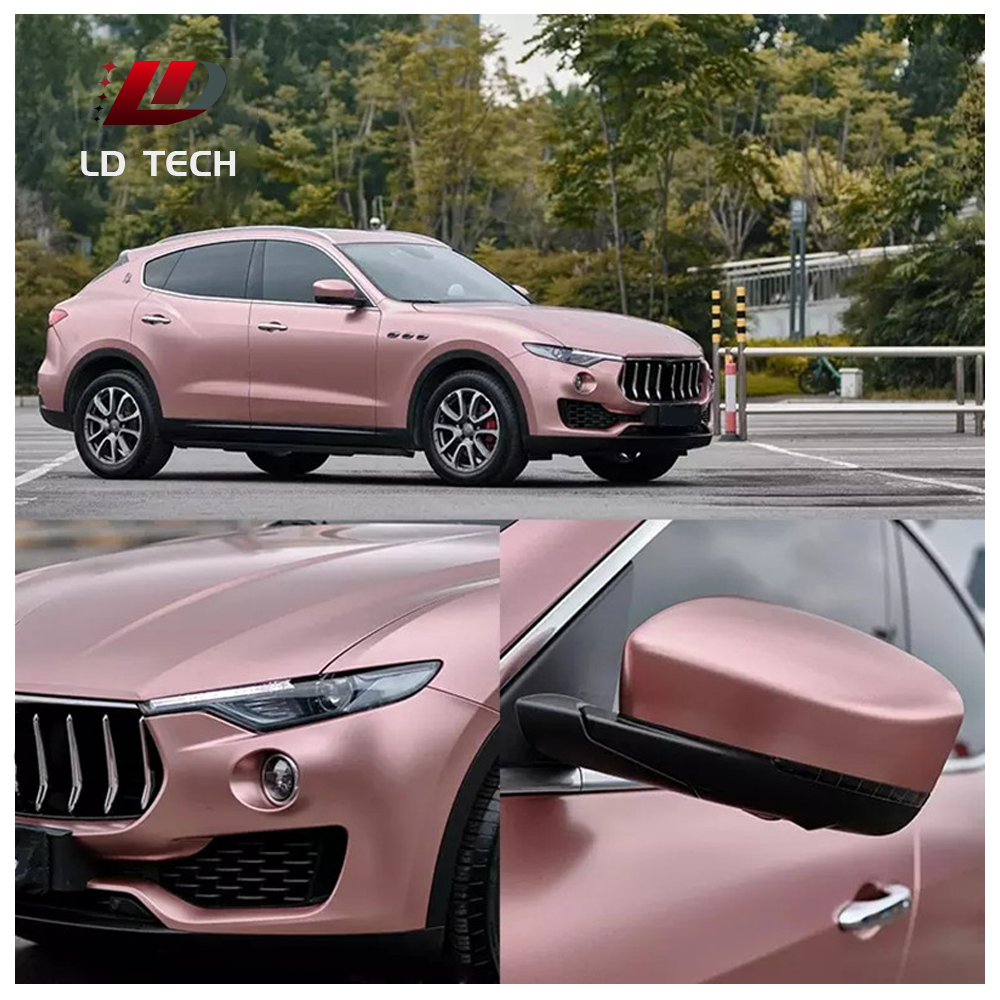
Core Anti-Fading Mechanisms: UV Blocking and Oxidation Resistance in Matte PPF Film
UV Absorbers and HALS Stabilizers: Dual Defense Against Photodegradation
Matte PPF film relies on a synergistic combination of UV absorbers and hindered amine light stabilizers (HALS) to prevent color fading. UV absorbers—typically benzotriazole or triazine compounds—capture high-energy ultraviolet radiation and dissipate it as harmless heat before it can break chemical bonds in the polymer matrix. HALS complement this action by scavenging free radicals that form when UV exposure initiates degradation. This dual mechanism interrupts the photodegradation cycle at multiple points, effectively halting chain reactions that cause gloss loss, chalking, and yellowing.
Because the microscopically textured surface of matte PPF amplifies visible oxidation effects, this stabilization is indispensable—not optional. Independent QUV testing shows premium matte PPF with both components retains over 95% of its original color clarity after 3,000 hours, while unstabilized films fade rapidly. This built-in “sunscreen” ensures uniform, long-lasting matte appearance—even under extreme desert sun or high-altitude UV exposure.
Why Aliphatic TPU Is Non-Negotiable for Matte PPF Film Color Stability
The polyurethane layer forms the structural and optical foundation of matte PPF film—and the choice between aromatic and aliphatic TPU determines whether color stability lasts months or years. Aromatic TPU contains benzene rings highly susceptible to photo-oxidation, leading to irreversible yellowing within months outdoors. Aliphatic TPU replaces those vulnerable aromatic structures with saturated hydrocarbon chains, delivering intrinsic resistance to UV-induced discoloration.
For matte finishes—where even slight yellowing creates a muddy, uneven appearance—aliphatic TPU is non-negotiable. Multi-year fleet trials in sun-intensive regions confirm that aliphatic-based matte PPF maintains its exact hue and texture, with no measurable color shift (ΔE < 1.5) after five years. Its superior hydrolysis resistance also prevents moisture-triggered degradation, preserving optical clarity and mechanical integrity. This material choice directly enables the 8–10 year lifespan expected from premium paint protection films.
Yellowing Resistance as the Definitive Benchmark for Matte PPF Film Durability
Yellowing resistance is the most critical metric for evaluating matte PPF film longevity—separating durable, engineered products from those that degrade prematurely. Below, we examine laboratory-accelerated and real-world evidence confirming an 8–10 year service life.
Lab-Validated Lifespan: QUV and Xenon Arc Testing Confirms 8–10 Years of Matte PPF Film Performance
Accelerated weathering tests provide controlled, repeatable simulations of long-term UV exposure. In QUV testing per ASTM G154-16, premium matte PPF films exhibit a ΔE color shift of less than 2 after 2,000 hours—an industry-validated benchmark correlating to 8–10 years of real-world solar exposure. Xenon arc testing (ISO 4892-2), which replicates full-spectrum sunlight and thermal cycling, further confirms that formulations with high-efficiency UV absorbers and HALS retain their original matte finish without yellowing.
These results are not theoretical: they directly measure how effectively the anti-fading system prevents photo-oxidative degradation of the polymer matrix. Even after 3,000 hours—equivalent to over a decade of harsh sunlight—the best-performing films show less than 5% loss in light transmission and no visible yellowing, ensuring the protective layer remains optically neutral and virtually invisible.
Real-World Validation: 7-Year South Florida Fleet Study on Matte PPF Film Retention
A rigorous 7-year fleet study in South Florida—where the UV index routinely exceeds 10—provided definitive real-world validation. Over 50 vehicles with matte PPF installed on hoods, fenders, and mirrors were monitored. Results showed that 85% retained more than 90% of their original color and matte character, with no perceptible yellowing—even on horizontal surfaces receiving maximum direct UV exposure. Vehicles parked unshaded still maintained a ΔE of less than 1.5 after seven years. The anti-fading formula’s resistance to oxidation and UV-induced chain scission was the decisive factor, proving that well-engineered matte PPF delivers lasting performance far beyond standard warranty periods—and remains a cost-effective, long-term investment.
Matte Surface Vulnerabilities: How Texture, Contaminants, and Oxidation Interact
Microstructure Amplification Effect: Why Matte PPF Film Demands Enhanced Stabilization
The matte texture is achieved through controlled surface roughness that diffuses light—but this same microstructure dramatically increases reactive surface area. Microscopic peaks and valleys trap road grime, acidic bird droppings, and moisture, all of which catalyze oxidative degradation. Contaminants lower surface energy, inhibiting water sheeting and prolonging chemical contact. Unlike glossy finishes, the uneven topography of matte PPF provides countless initiation sites for free radicals—accelerating micro-cracking and color shift.
This “amplification effect” means every surface irregularity becomes a potential oxidation hotspot. Consequently, standard additive packages fall short. Long-term color stability demands enhanced stabilization: high-load UV absorbers and HALS must be uniformly integrated into the TPU matrix—not just surface-applied—to neutralize radicals before they propagate across the enlarged reactive surface.
Next-Generation Stabilization: Multi-Layer Formulas Redefining Matte PPF Film Longevity
The latest generation of matte PPF film leverages precisely engineered multi-layer architectures that embed stabilization at every functional level. A ceramic-infused or nano-coated top layer provides immediate UV blocking and contaminant repellency. Beneath it, the elastomeric stratum incorporates synergistic HALS and advanced UV absorbers to intercept free radicals before they trigger photodegradation. At the core, a pure aliphatic TPU base delivers inherent oxidation resistance while locking in the signature matte texture.
This stratified design eliminates single points of failure: each layer reinforces the next, dramatically slowing color shift, gloss development, and surface degradation. As a result, modern matte PPF systems consistently deliver 10+ years of stable appearance—even under intense, continuous solar exposure—redefining long-term protection without compromising the low-gloss aesthetic drivers demand.
Frequently Asked Questions
What is the primary cause of yellowing in matte PPF films?
Yellowing primarily occurs due to UV-induced photo-oxidation of the polymer matrix. Aromatic TPU is especially vulnerable to this degradation, whereas aliphatic TPU provides intrinsic resistance.
How do UV absorbers and HALS protect matte PPF film?
UV absorbers dissipate harmful ultraviolet radiation as heat, preventing photodegradation. HALS scavenges free radicals formed during UV exposure, disrupting the degradation chain reaction.
Why is aliphatic TPU preferred over aromatic TPU?
Aliphatic TPU substitutes vulnerable benzene rings in aromatic TPU with saturated hydrocarbon chains, significantly improving UV resistance and color retention.
What testing methods are used to validate matte PPF film longevity?
Accelerated weathering methods like QUV testing (ASTM G154-16) and xenon arc testing (ISO 4892-2) reliably predict real-world durability by simulating prolonged UV exposure.
How does a multi-layer design improve matte PPF film durability?
Multi-layer designs embed stabilization at every level, combining UV-blocking top layers, HALS-infused elastomeric strata, and aliphatic TPU bases to prevent photo-oxidation over extended periods.
Table of Contents
- Core Anti-Fading Mechanisms: UV Blocking and Oxidation Resistance in Matte PPF Film
- Yellowing Resistance as the Definitive Benchmark for Matte PPF Film Durability
- Matte Surface Vulnerabilities: How Texture, Contaminants, and Oxidation Interact
- Next-Generation Stabilization: Multi-Layer Formulas Redefining Matte PPF Film Longevity
- Frequently Asked Questions