EN
EN

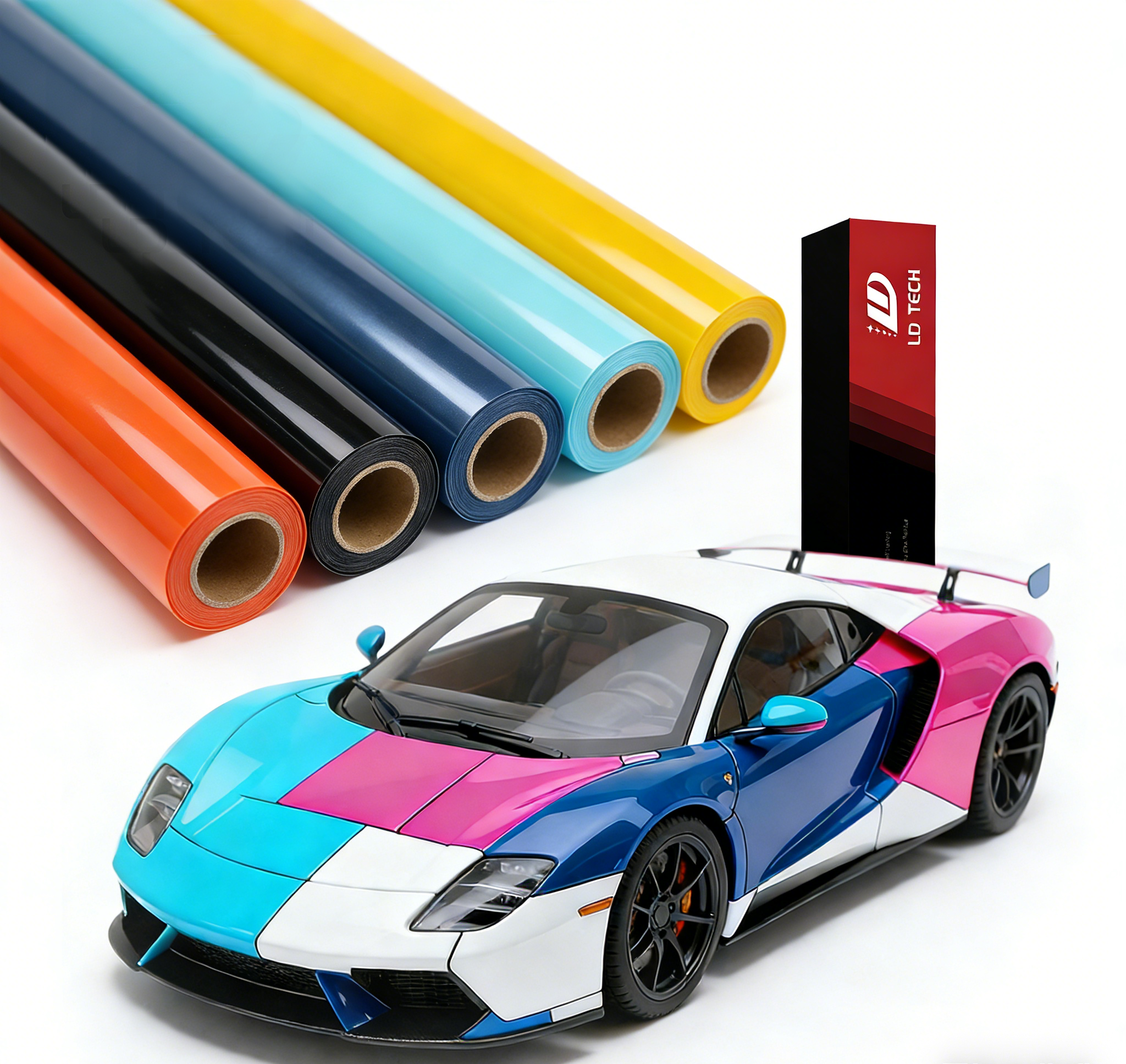
Core Color & Finish Innovations in Modern Vehicle Wraps
Matte, Chrome, Satin, and Iridescent Finishes Redefining Car Wrap Aesthetics
For any vehicle wrap project, the finish is a defining element—and innovations in matte, chrome, satin, and iridescent films are redefining automotive aesthetics. Matte finishes deliver a non-reflective, velvety surface that conveys understated luxury while effectively masking minor imperfections—making them especially popular for high-end sedans and executive fleets. Chrome wraps offer mirror-like reflectivity, commanding attention on show floors or promotional vehicles. Satin strikes a refined middle ground: soft sheen with minimal glare, ideal for professional branding where visibility and subtlety must coexist. Iridescent wraps use pearlescent pigments to shift color with viewing angle, creating dynamic visual interest prized by customizers and lifestyle brands.
These finishes transform wraps from protective coverings into expressive design tools—enabling precise alignment with brand guidelines or personal identity without altering factory paint. Advances in polymer film technology have significantly improved conformability, scratch resistance, and UV stability, with many premium wraps now rated for up to seven years of outdoor performance. According to industry analysts, matte and iridescent finishes collectively account for over 30% of new car wrap installations—a marked increase from just three years ago—reflecting a broader market shift toward expressive, sensory-rich customization.
Color-Shifting Films and 3D Textured Surfaces: Enhancing Visual and Tactile Impact
Color-shifting (or “chameleon”) films leverage prismatic pigments to transition smoothly between hues as lighting or perspective changes—producing a liquid-metal effect that suggests motion even at rest. Complementing this visual dynamism, 3D textured films add tactile dimension through embossing techniques that replicate carbon fiber, brushed aluminum, hammered metal, or even woven leather. These surfaces deepen perceived value and differentiate wrapped vehicles from standard graphics, offering both aesthetic sophistication and functional benefits—such as enhanced grip or reduced fingerprint visibility.
For commercial applications, a 3D carbon fiber wrap delivers a high-performance aesthetic at a fraction of the cost of real composite parts. When combined with color-shifting elements, designers create multi-sensory experiences that engage viewers beyond the visual—strengthening memorability and brand impact. Improved film calibrations now ensure consistent texture retention across complex contours, while advanced adhesives maintain edge integrity during thermal cycling and repeated washing. As these technologies mature, they’re moving from niche customization into mainstream fleet and OEM-adjacent applications—proving that durability and innovation need not be mutually exclusive.
Material Advancements Driving Durability and Sustainability in Vehicle Wraps
Next-Gen Films and Adhesives: UV Resistance, Conformability, and Long-Term Adhesion
Modern vehicle wraps rely on engineered polymer films designed for long-term resilience—not just appearance. High-performance polymeric substrates incorporate UV absorbers and stabilizers that block >99% of harmful UVA/UVB radiation, preventing pigment degradation and yellowing that once limited wrap lifespans. Enhanced molecular flexibility enables superior conformability: films stretch uniformly over compound curves, recessed door handles, and aerodynamic spoilers without distortion, bridging, or micro-tearing.
Paired with low-initial-tack, pressure-activated adhesives, these films allow precise repositioning during installation—critical for large-format fleet wraps—while developing robust, permanent bonds after final squeegee application. Independent testing confirms these systems retain >95% adhesion strength after 2,000 hours of accelerated weathering (SAE J2527), even under extreme temperature fluctuations (-40°C to +85°C). The result is dual-purpose protection: shielding original paint from stone chips, abrasion, and chemical exposure while maintaining optical clarity and dimensional stability for up to seven years—directly lowering total cost of ownership for commercial operators.
Eco-Conscious Evolution: Biodegradable Films and Low-VOC Adhesives in Car Wrap Manufacturing
Sustainability is no longer a differentiator—it’s an operational imperative reshaping material development across the wrap industry. Leading manufacturers now offer certified biodegradable films derived from plant-based polymers (e.g., polylactic acid blends) that decompose fully within 1–3 years in industrial composting conditions—reducing landfill burden without compromising tensile strength or print fidelity. Equally significant are low-VOC and solvent-free adhesive systems: water-based, acrylic dispersions eliminate hazardous air pollutants during both production and installation, supporting compliance with EPA, EU REACH, and California Air Resources Board (CARB) standards.
These advances align with rising demand for green-certified facilities; many installers now pursue ISO 14001 certification and integrate closed-loop recycling programs that reclaim up to 92% of trim waste for reuse in non-critical applications like signage backings. As regulatory frameworks tighten globally—and B2B procurement policies increasingly require environmental product declarations (EPDs)—eco-conscious materials are transitioning from premium options to baseline expectations. The industry’s progress demonstrates that rigorous performance, responsible sourcing, and end-of-life accountability can coexist in a single film system.
Strategic Color Application: Psychology, Culture, and Global Market Alignment
Color Psychology in Mobile Advertising: How Hue Influences Brand Recall and Engagement
In mobile advertising, color operates as a silent but potent cognitive trigger—shaping first impressions, reinforcing memory, and guiding emotional response before a single word is read. Research consistently shows that color accounts for up to 85% of initial purchase decisions (University of Winnipeg, 2022), and a landmark study published in Management Decision confirmed that strategic color use boosts brand recognition by as much as 80%. For vehicle wraps—functioning as high-frequency, high-reach billboards—the right hue doesn’t just attract attention; it encodes brand values into milliseconds of visual processing.
Blue remains the dominant choice for sectors demanding trust and reliability—finance, healthcare, and logistics—leveraging its universal association with competence and calm. Red, by contrast, activates urgency and energy, making it highly effective for food delivery, entertainment, and flash-sale promotions in dense urban corridors. Green signals sustainability and wellness, resonating strongly with EV charging networks and organic retailers. Crucially, these effects are measurable: fleet operators using psychologically aligned color palettes report 22–35% higher unaided recall in post-campaign surveys (WrapFleet Analytics, 2023). That makes color selection less about preference—and more about precision targeting.
Regional Color Preferences and Cultural Symbolism Across Key Markets (NA, EU, APAC)
Global wrap campaigns demand cultural fluency—not just translation. Color carries layered symbolic meaning that varies dramatically across regions, and misalignment risks unintended messaging or diminished resonance. In North America, white communicates simplicity, cleanliness, and innovation—commonly used by tech and healthcare fleets. Across Western Europe, green carries strong eco-ethical associations, aligning naturally with ESG-aligned brands and electric mobility initiatives. In Asia-Pacific markets, symbolism runs deeper: red signifies prosperity and celebration in China and Vietnam; gold evokes prestige and success in Japan and South Korea; and white—while neutral in the West—can connote mourning in parts of East Asia and should be avoided as a primary wrap color in those contexts.
A successful multinational campaign therefore requires localized color strategy—not just palette swaps. For example, a global ride-hailing brand may deploy deep blue in Berlin (trust + efficiency), vibrant red in Shanghai (energy + luck), and teal-green in Toronto (freshness + approachability)—all anchored to the same core logo but calibrated for regional perceptual frameworks. This level of nuance transforms vehicle wraps from static assets into culturally intelligent touchpoints—increasing engagement, reducing brand friction, and supporting authentic local market entry.
Future-Forward Trends: Smart and Adaptive Vehicle Wrap Technologies
The next evolution of vehicle wraps moves beyond static aesthetics into responsive functionality. Emerging smart materials—including electrophoretic (e-ink), thermochromic, and photochromic films—enable wraps that adapt in real time to environmental inputs. Electrophoretic systems, for instance, allow full-color image switching via low-voltage current, letting commercial fleets rotate promotional messages or update safety signage without physical rewrapping. Thermochromic pigments darken in heat, reducing cabin temperatures by up to 12°C—cutting AC load and improving EV range. Photochromic variants lighten or intensify based on ambient UV levels, enhancing daytime visibility while minimizing glare at night.
Beyond aesthetics, sensor-integrated wraps are entering pilot deployment: embedded conductive traces can power LED turn indicators or brake-light overlays, improving conspicuity for cyclists and pedestrians. Though still in early adoption, these adaptive systems are gaining traction—supported by projected growth in the global automotive smart materials market, expected to rise from $3.2 billion in 2023 to $7.8 billion by 2030 (Grand View Research, 2024). As manufacturing scalability improves and costs decline, smart wraps will shift from novelty to necessity—transforming every vehicle into an interactive, data-responsive surface where form, function, and intelligence converge.
Frequently Asked Questions (FAQ)
What are the benefits of using matte, chrome, satin, or iridescent finishes in vehicle wraps?
These finishes enhance the aesthetic appeal of vehicles, offering versatility for brand alignment or personal preferences. Matte delivers understated luxury, chrome creates high reflectivity, satin balances soft sheen with minimal glare, and iridescent shifts color dynamically based on viewing angles.
What is the lifespan of modern vehicle wraps?
Premium wraps can last up to seven years due to improvements in polymer technology and UV stabilization, ensuring long-term durability without fading or deformation.
How do color-shifting films work?
Color-shifting films use prismatic pigments to transition smoothly between hues based on lighting and perspective, producing dynamic, liquid-metal effects that make wrapped vehicles stand out.
Are there eco-friendly options for vehicle wraps?
Yes, biodegradable films made from plant-based polymers and low-VOC adhesives are now available, ensuring sustainability without compromising performance.
What role does color psychology play in mobile advertising?
Colors influence brand recall and emotional response. Strategic hue selection can encode brand values, increase memory retention, and drive engagement, enhancing overall campaign effectiveness.
What are smart and adaptive vehicle wraps?
These are advanced technologies like e-ink, thermochromic, and photochromic wraps that respond dynamically to environmental changes—enhancing functionality and interactivity for vehicles.
Table of Contents
- Core Color & Finish Innovations in Modern Vehicle Wraps
- Material Advancements Driving Durability and Sustainability in Vehicle Wraps
- Strategic Color Application: Psychology, Culture, and Global Market Alignment
- Future-Forward Trends: Smart and Adaptive Vehicle Wrap Technologies
-
Frequently Asked Questions (FAQ)
- What are the benefits of using matte, chrome, satin, or iridescent finishes in vehicle wraps?
- What is the lifespan of modern vehicle wraps?
- How do color-shifting films work?
- Are there eco-friendly options for vehicle wraps?
- What role does color psychology play in mobile advertising?
- What are smart and adaptive vehicle wraps?